Save $50 on a new shower door · Fast shipping from CA & GAShop Now

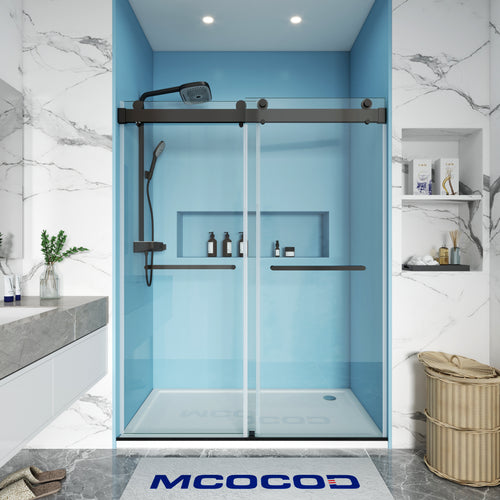
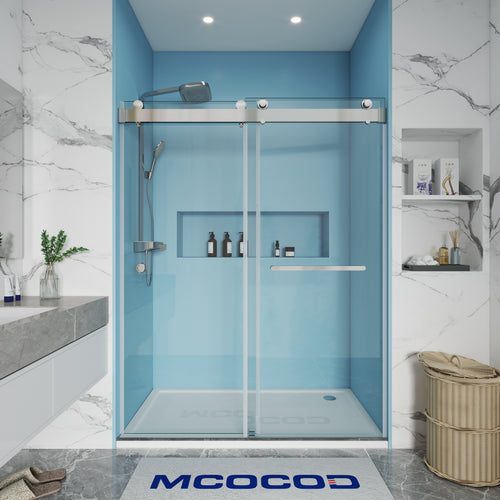
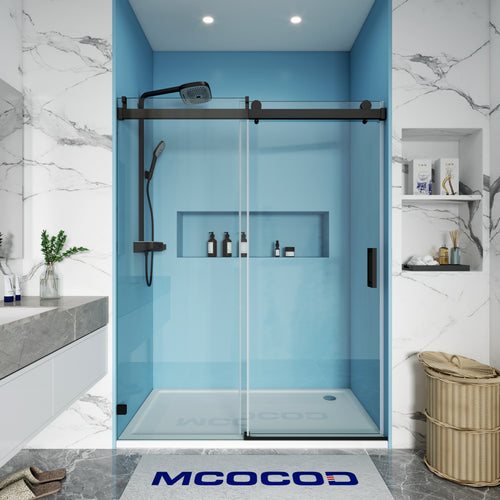
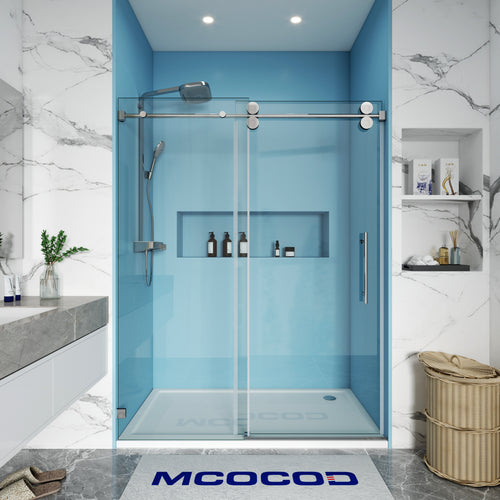
Solid surface is the pan material that can be sanded back to a uniform finish, which is why it is specified where damage has to be repairable rather than merely concealed. It is also denser than acrylic, so it changes what the floor has to support and how the pan is handled on site.
What "Solid Surface" Means in a Listing
Solid surface is a mineral-filled acrylic or polyester composite that is homogeneous through its thickness: the colour and pattern run all the way through rather than sitting on a coated skin. That property is what allows a scratch to be sanded out and, in some products, a join to be bonded and refinished flush.
The term is used loosely in the market. Cultured marble is a gel-coated composite with a different repair path; acrylic is a thinner shell that marks rather than refinishes. The question to ask about any pan is not what it is called but how it is built: shell thickness, what sits behind it, and whether the surface can be refinished.

Repairability and Refinishing
Light surface scratches can usually be removed with an abrasive pad and a refinishing compound, worked along the direction of the finish and rinsed afterwards. Where damage is deeper, some pans can be dressed with a matched filler, and in a workshop a solid surface panel can be sanded back to an even surface.
What repairability does not cover is structural failure. A crack through the drain area or a damaged flange is a replacement in any material, because the pan is no longer watertight. The distinction matters at purchase time: a repairable surface is worth paying for, but it is not insurance against a bad setting bed.
Weight and What the Subfloor Has to Do
A solid surface pan weighs more than a thin acrylic shell of the same footprint, and often more than a composite pan. That affects two things: handling on delivery, and how critical the setting bed becomes, because a heavier pan concentrates load on the high points of an uneven bed.
Before setting, check that the subfloor does not deflect between joists and that the drain opening is framed rather than cut into a soft spot. Both checks matter more with a heavier component, and both are easier to fix before the pan is on the floor. Where the structure is marginal, a lighter pan or a different location is usually the sensible answer rather than a heavier bed.
Matching the Pan to the Wall and the Door
Most solid surface pans are specified with a matching wall system, because the appeal of the material is a continuous finish from floor to wall with as few joints as possible. That makes the pan part of a system rather than a standalone purchase: the pan sets the width, the wall panels follow it, and the door is measured from the finished opening.
| Component | What it sets | Check against |
|---|---|---|
| Pan footprint | Width the door has to cover | Finished opening at three heights |
| Drain position | Whether plumbing moves | Trap centre from two reference walls |
| Threshold height | Base line and glass height above it | Intended step-over and door height |
| Wall panels | Finish continuity and joint count | Available height and any window or niche |
Where the pan has to match a vanity top or a threshold in the same material, order them together: colour matching across batches is not guaranteed, and a pan that arrives a shade away from the wall panels is visible in every light. The full range of wall options is listed in the shower surrounds collection.

Installation Requirements and Cut-Outs
Installation follows the same sequence as any moulded pan: flat and sound subfloor, continuous setting bed, level in both directions, drain connected without pulling the pan, and the wall covering installed afterwards so its bottom edge laps the flange. Drain cut-outs are formed at the factory; on-site cutting is limited to what the manufacturer permits, and the flange and drain area are never trimmed.
Plumbing details for the trap and drain come from the adopted code published at iccsafe.org, and the wall junction the pan has to work with is described in the wet-area methods published by the Tile Council of North America and catalogued on the Whole Building Design Guide.
Cleaning and Long-Term Appearance
Solid surface cleans with a non-abrasive liquid product and a soft cloth. Abrasive powders and scouring pads are what create the dull patches that then have to be refinished, and blades should never be used. Where a matt finish has become glossy in one area, a refinishing compound applied evenly across the whole surface restores a uniform appearance.
Prevention is the same routine that suits any pan: rinse after cleaning, keep the shower ventilated so the surface dries, and deal with mineral deposits early. Component expectations and test methods for these products are published by ASTM International, and where a previous pan has leaked into the floor assembly the moisture guidance published by the EPA explains how far the repair has to go.
Where Solid Surface Loses to Tile
Tile remains the better answer where the footprint is genuinely non-standard and no pan can be made economically, where the surface has to be repaired piece by piece after heavy damage, or where the design intent is a floor that runs into the wall with no visible receptor edge. Tile also allows a deeper, more sculpted slope than most moulded pans.
What tile does not offer is the reduced joint count. Every joint in a wet area is a maintenance point, and a moulded pan removes the field joints entirely, leaving only the perimeter. For a busy household in a hard-water area, that difference is usually worth more than the material's aesthetic advantage.
FAQ
Are solid surface shower pans good?
They are a strong choice where repairability and finish consistency matter. The surface can be refinished rather than replaced, the joint count is minimal, and the material is available in colours that match solid surface walls and tops. They are heavier than acrylic and cost more, so the subfloor and setting bed have to be right.
What is the best solid surface material for showers?
The one whose construction suits the installation: a homogeneous composite that can be refinished, with a flange designed to connect to the wall waterproofing. Ask about shell thickness and what sits behind the surface rather than relying on the material name.
What are the disadvantages of solid surface shower walls and pans?
Higher material cost, more weight to handle, and a matt surface that shows hard-water deposits if it is not rinsed regularly. Scratches can be refinished, but structural damage still means replacement, and the pan has to be supported continuously rather than spot-bedded.
How much does a solid surface shower pan cost?
More than a composite or acrylic pan of the same footprint, because the material is denser and often matched to a wall system. Price is driven by footprint, thickness, drain position and whether the pan is part of a matched surround set; delivery and handling add more than they would for a lighter pan.
Send the finished opening, the trap position and the wall finish you are matching, and we will confirm the pan and surround combination that lines up.
Browse shower bases · Match wall panels · Request a material comparison


